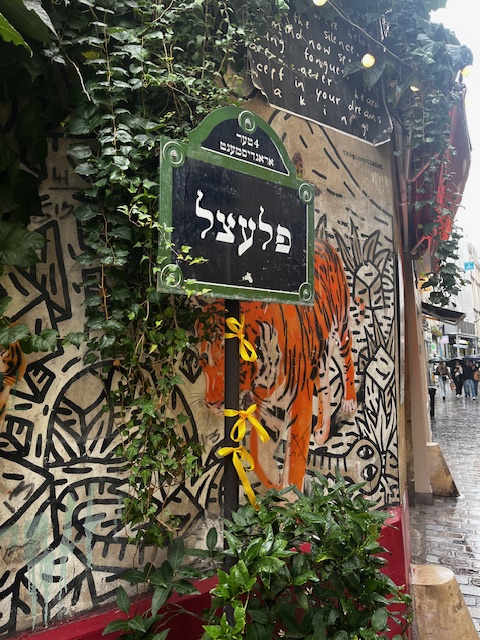
If you’ve ever walked down Rue des Rosiers, you know the smell. That warm, spiced scent of garlic, parsley, cumin, and crispy chickpeas. In the heart of Paris’s Jewish quarter, falafel isn’t just street food — it’s heritage.
A Dish on the Move
Falafel originates from the Middle East. Its exact birthplace is still debated: some say Egypt, others Israel or Lebanon. One thing is clear: falafel traveled with migrants, refugees, and families in search of a new home — and it brought its flavors with it.
Paris Meets the Diaspora
In the 1960s and ’70s, many Jewish immigrants of Sephardic and Mizrahi descent settled in Paris, including in Le Marais. They came from countries like Tunisia, Morocco, Algeria, and Iraq, and they brought their kitchens with them: aromatic, bold, comforting — including falafel.
Rue des Rosiers became their center. What was once a hub of Ashkenazi Jewish butchers and synagogues slowly transformed into a crossroads of Jewish traditions from around the world.
The rise of the falafel stand
In the 1980s, L’As du Fallafel opened its doors — today, it’s perhaps the most iconic falafel joint in Paris. With a simple formula (warm pita, fresh vegetables, hummus, eggplant, and a generous heap of falafel balls) and a legendary reputation, the line outside hasn’t disappeared since.
Other places followed. Rue des Rosiers became a pilgrimage for falafel lovers: Mi-Va-Mi, King Falafel Palace, Chez Hanna… each with their own twist, their own sauces, their own secret.
More Than a Meal
Falafel in Le Marais isn’t a trend. It’s a story of migration, of making a home in a new city, of how food carries memories. Each falafel ball holds a bit of diaspora, each pita a piece of history.
For Parisians, falafel is now as Parisian as a croissant — and that says a lot.
Joining a Solosights tour through Le Marais?
You’ll smell it before you see it. Maybe you’ll grab a bite between two stops. Maybe you’ll sit with it on a bench in Place des Vosges. But one thing’s for sure: that falafel tells a story — you just have to taste it.

 SoloSights
Leave a comment